
Autonomic Networking Framework Explained: API-Driven, AI-Assisted Service Architecture
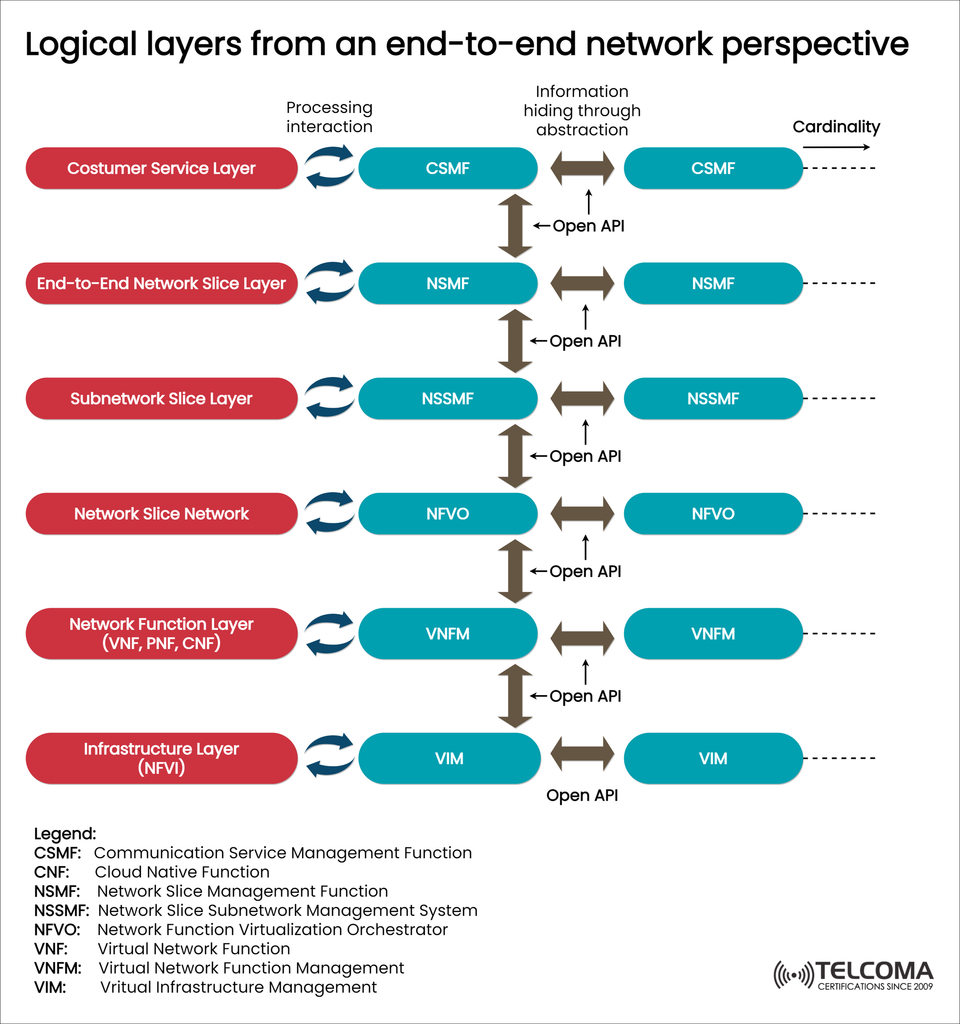

Grasping a Service-Based Framework with Autonomic Networking
As telecom progresses toward 5G and beyond, automation and intelligence will be the mainstays of the next generation of networks. A service-based framework with autonomic networking can provide dynamic orchestration, assurance and real-time management of policies using open APIs, data-sharing and AI/ML capabilities.
This architecture, as shown, simplifies complex telecom infrastructure and modularizes it into interoperable planes. Let's look at the planes, KI and workflows, and why it is important to building a future-proof self-driving network.
🧠 The Important Components of the Autonomic Networking Framework
Expose Plane (REST Open API Plane) - The Interface layer for exposing APIs to tenants of a network slice. This plane will enable external systems to gain access to internal telecom services via secured REST APIs.
Core Network Planes
Plane Functionality
Data Plane Contains HTTP-based REST APIs that provide management of user and application traffic (e.g., UPF)
User Plane Performs high-speed traffic forwarding using the User Plane Function (UPF)
Control Plane Provides qualification of mobility, sessions, and policy management using virtual functions (AMF, SMF, etc).
Fulfillment Plane Executes the service provisioning workflow using NetConf data model specification with YANG, and REST APIs
Assurance Plane Creates real-time collection of KPIs and metrics using event/message-based buses such as Kafka.
🔍 Sample Virtual Functions and Protocols
AMF: Access and Mobility Function
SMF: Session Management Function
NEF: Network Exposure Function
NRF: Network Repository Function
NSSF: Network Slice Selection Function
These functions are available via REST-based interfaces, enabling the programmable control of the network.
🧠 Autonomic Networking Knowledge Plane (KP)
The Knowledge Plane provides the intelligence in the network by:
Data Lakes
AI/ML Models
SLA rules and collectors
Metadata both contextual and static (e.g., policies, security keys)
It handles learning, reasoning, and decision making, which are all transmitted back into assurance, inventory, and orchestration.
🔁 Workflow Automation via Orchestration and Assurance
Orchestration is used for:
Translating the intent into workflows
Provisioning of network slices
Coordinating resources across domain
Assurance is used for:
Real-time monitoring
SLA compliance checks
Utilization of feedback loops to initiate reconfiguration or healing
Organizations need to view Orchestration and Assurance components holistically to understand how these components relate to network inventory for improved inventory of:
Network elements
Configurations
Templates and Descriptors
📌 Why This Architecture is Important for Telecommunications
✅ Modular Design
The various planes can grow independently of each other, enabling more flexibility in the process of updating.
✅ API First
REST-based opening of APIs allows for easy coupling with third-party platforms as integrations with OSS/BSS.
✅ AI-Driven Intelligence
Because the knowledge plane serves as an interface for real-time decision making using ML models, along with historical data, it's effective.
✅ Zero-Touch Networking
Since automation is embedded into the architecture, it can't help as an enabler of zero-touch.
🔧 Practical Implementation Steps for Operators
Step Actions Objective
1 Secure REST API visibility Enable self-service for tenants
2 Implement data collection mechanism(kafka) Build assurance capabilities
3 Train AI/ML models using telemetry data Automate service level compliance
4 Apply templates and workflow Standardize provisioning activities
5 Leverage orchestration and inventory Close the automation loop
📘 Conclusion:
Future-Proofing Networks with Autonomic Design
In a service-based architectural framework with autonomic networking, it's not just about controlling networks—it's about making networks control themselves! By providing insight and pointers to data, orchestration services, and open APIs, telecom operators can deliver high-reliability SLA-driven services on a large scale.
This architecture is essential for the acceptance of 5G evolution, edge computing, private networks and eventually 6G intelligent ecosystems.
🚀 Real Life Use Cases and Applications in the Industry
Autonomic networks and service based frameworks are not just for thought experiments. It has relevance to real deployments and solutions being seen across the globe.
🏢 Use Cases in an Enterprise context
Private 5G networks, with dynamic 5G slicing for manufacturers, miners and health case as examples.
SLA- driven IoT services where latency, reliability and throughput varies depending on the hardware device class.
Automated WAN orchestration in large corporations and organizations deploying intent-based network-controlled policies.
🛰️ Use Cases in Telecom Operators context
Dynamic spectrum sharing providing network slicing for both consumer and enterprise consumers.
🧪 Labs and Experiments
Examples of AI powered orchestration being trialed in open RAN (Research-and-Development) deployments.
Zero touch service assurance using Kafka and Data Lakes in carrier edge clouds.
Integration with digital twins for predictive modelling and simulation.
🌐 Enabling Technologies Supporting Autonomic Networks
Not an exhaustive list, but several enabling technologies that help support this framework include:
RESTful APIs (Open API) - Allow smooth communication between layers and between layers and 3rd party applications.
NetConf/YANG - Configuration management standards for programmable networks.
Kafka or similar message buses - For real-time telemetry and data distribution.
AI/ML Algorithms - Used by the Knowledge Plane for predictive assurance and policy optimization.
Data Lakes & Inventory Systems - Unified resource for training data, configurations and version control.
🔮 What does the future hold?
Autonomous Networks
In the next step, autonomic networking is a stepping stone towards self-driving networks, networks that Sense, Learn, Act and Adapt without human intervention.
Exciting possibilities moving forward including:
Closed loop automation with proactive remediation.
Federated learning models shared across multiple operators.
The integration of digital twins and simulation to plan better networks.
Intent-based networking (IBN) where operators tell the networks what they want to achieve instead of how to do it.
📣 Final Thoughts
For telecom providers to meet the new challenges of 5G, IoT, etc., the industry will have to adopt service-based, autonomic network structures. The benefits of this architecture will provide:
Better operational efficiency through automated operations
Better resiliency with AI-based assurance
Easier service delivery with use of standardized APIs
With a layered, intelligent, and data-driven approach to infrastructure this design will allow for network operators to truly enable their infrastructure as an agile, scalable, self-healing digital fabric.