
Mission Critical MTC Solution Components for Reliable 5G and Beyond
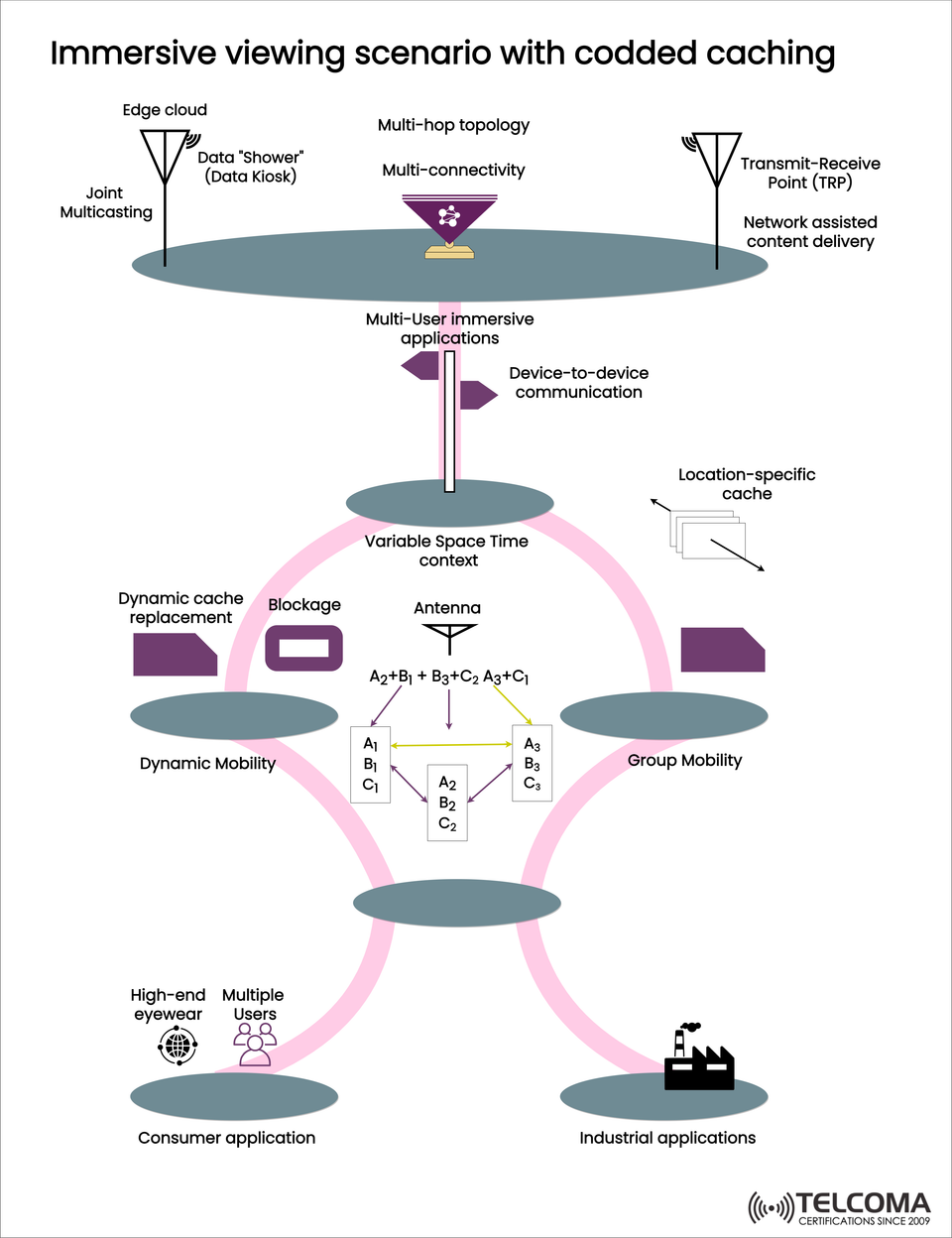

The growth of machine-type communication (MTC) is changing the game in telecom. Unlike the way humans communicate, MTC emphasizes device-to-device connections on a large scale, which is key for things like IoT setups, smart factories, self-driving cars, and critical industrial systems.
When it comes to applications like remote surgeries, autonomous driving, power grid management, or emergency responses, even a slight delay or interference can lead to failures. That’s where mission-critical (MC) MTC solutions come into play.
The diagram shows a comprehensive framework for mission-critical MTC, which includes:
Critical management functions for ensuring quality of service (QoS)
Resource awareness tactics for keeping an eye on and predicting needs
Advanced networking methods like time-sensitive networking and semi-persistent scheduling
Innovative antenna and relay technologies for dependable communication
Now, let’s dive into each of these components a bit more.
Key MTC Management Functions
At the core of mission-critical communication is managing resources and ensuring coexistence across different networks.
- Dynamic Coexistence and Resource Assignment
This ensures that multiple devices and services can share the same spectrum without causing interference.
Bandwidth is allocated dynamically based on priority and demand.
This is crucial in environments with multiple networks and bands.
- Proactive Mitigation of Interference
This method predicts and lessens interference before it affects communication.
It uses AI-driven monitoring to identify signal clashes or noise.
This boosts reliability in dense IoT setups.
- Operator-Independent MC-MTC Broker
Acts as a neutral broker between operators, allowing devices to switch networks smoothly.
This is important for mission-critical situations where getting locked into one network could lead to outages.
It supports multi-operator roaming for continuous connectivity.
- Digital Twin of MTC Device and Network
It creates a virtual model of devices and networks, enabling simulation, prediction, and performance optimization.
It spots potential failures beforehand through “what-if” simulations.
This enhances real-time decision-making in crucial sectors like energy and healthcare.
Resource Awareness: Monitoring and Prediction
Mission-critical systems depend on having real-time awareness of network resources, such as spectrum, energy, and connectivity.
Spectrum-to-Energy Awareness
This system keeps tabs on spectrum usage, interference levels, and energy efficiency.
It helps balance spectrum allocation with energy consumption for a sustainable IoT framework.
Centralized vs. Distributed Resource Allocation
Centralized: A single entity manages all resources, ensuring consistent QoS.
Distributed: Localized management for lower latency and better fault tolerance.
Often, mission-critical systems require a hybrid model combining both methods.
Multi-Network and Multi-RAT Support
This guarantees that devices can communicate across various types of networks—whether cellular (5G/6G), Wi-Fi, wired, or satellite.
The system can adapt to different configurations based on use cases.
Key Networking Techniques
- Time-Sensitive Networking (TSN)
Provides deterministic, low-latency communication with guaranteed delivery times.
Crucial for real-time control applications like industrial automation and self-driving cars.
It prioritizes mission-critical traffic over background communications.
- Semi-Persistent Scheduling
This method cuts down on control signaling overhead by scheduling resources ahead of time.
It works great for regular traffic patterns (like sensors sending routine updates).
This boosts efficiency while maintaining QoS.
Advanced Physical Layer Innovations
To meet mission-critical MTC needs, we need new antenna and relay tech to enhance reliability and efficiency.
- Reconfigurable Intelligent Surfaces (RIS)
These surfaces reflect and direct radio signals smartly to improve coverage.
They help deal with dead zones and obstructions in critical situations.
By optimizing propagation paths, they lessen the need for high-power transmissions.
- New Antenna Techniques
Includes adaptive beamforming and massive MIMO (Multiple Input Multiple Output).
These enhance spectral efficiency and capacity.
They improve reliability in high-mobility cases like connected vehicles.
- Relay Concepts
They help in extending coverage and boosting link reliability by relaying signals through intermediate nodes.
This is especially useful in remote or disaster-struck areas where infrastructure is lacking.
Benefits of Mission-Critical MTC Components
Component Benefit Dynamic coexistence & resource assignment Efficient spectrum use without interference Proactive interference mitigation Reliable communication in dense environments Operator-independent MC-MTC broker Seamless cross-operator connectivity Digital twin Predictive performance optimization TSN & semi-persistent scheduling Deterministic latency & efficient traffic handling RIS & new antenna techniques Enhanced coverage and capacity Relay concepts Improved reliability in remote or critical areas
Real-World Applications
Industry 4.0
Automation in factories with real-time robotic coordination.
Predictive maintenance utilizing digital twins.
Healthcare
Remote surgeries enabled by TSN for consistent latency.
Ongoing patient monitoring using low-power MTC devices.
Autonomous Vehicles
Smooth transitions between multiple networks.
Clear interference-free vehicle-to-vehicle (V2V) communication.
Smart Energy Grids
Real-time demand forecasting with resource-aware MTC.
Fault detection using digital twins of grid equipment.
Public Safety and Disaster Recovery
Reliable communication through relay nodes in damaged networks.
Brokers that work independently of operators for emergency services.
Challenges Ahead
Despite the benefits, mission-critical MTC solutions come with hurdles:
Complex standardization challenges across operators and RATs.
High processing needs for digital twins and AI-driven interference reduction.
Balancing energy efficiency against reliability in large-scale IoT.
Security risks, as mission-critical systems can be prime targets for cyber threats.
Future Outlook
Looking forward to 6G and beyond, mission-critical MTC will develop with:
AI-native orchestration for anticipating and managing interference.
Quantum-safe encryption to protect vital infrastructure.
Sustainable IoT setups that leverage green energy for RIS and relay nodes.
Holographic communications and tactile internet will depend on interference-free, reliable MTC.
Conclusion
The components of mission-critical MTC are essential for the next wave of telecom networks, ensuring dependability, security, and adaptability across various applications.
By bringing together dynamic coexistence, interference management, digital twins, resource-aware networking, TSN, and advances in physical layers, telecom operators will be able to provide truly mission-critical services for industries, public safety, and the growing digital landscape.