
Multi-Access Edge Computing (MEC): How Fog, Edge, and Cloud Work Together

We're living in a digital age that's all about data-heavy applications, IoT devices, and 5G networks. Just think about everything from self-driving cars to smart factories—today's tech relies on having ultra-fast responses, real-time processing, and the ability to scale up quickly. Traditional cloud computing can struggle here because of issues with latency, bandwidth, and the physical distance to the data source.
That's where Multi-Access Edge Computing (MEC) comes in. It’s a cutting-edge approach that processes data closer to where it’s generated. By blending fog computing, edge data centers, and traditional cloud setups, MEC creates a smooth ecosystem that boosts efficiency and speed while keeping things scalable.
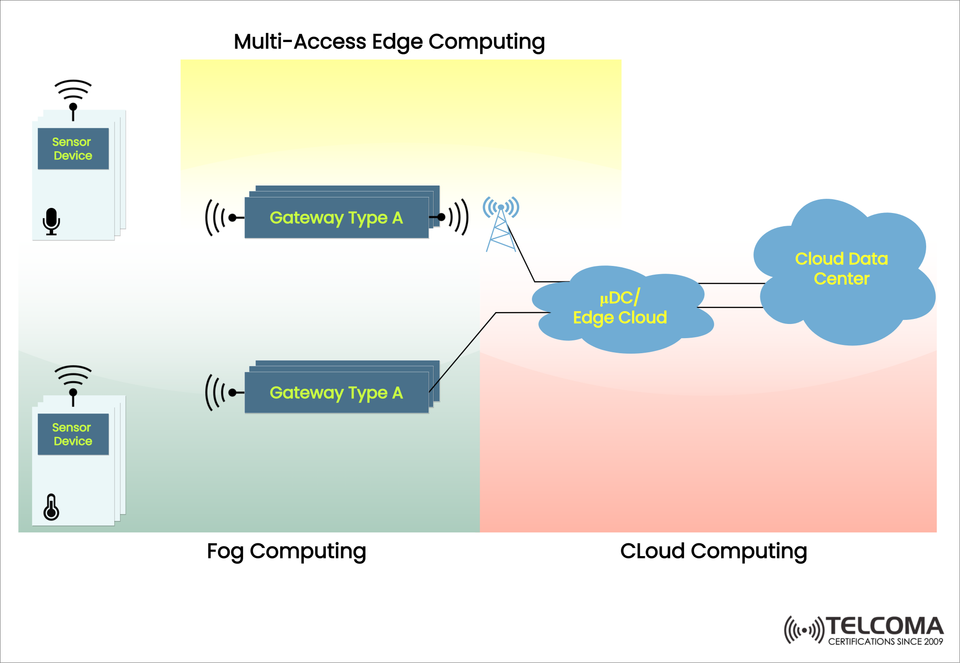
The diagram we uploaded illustrates this architecture quite well. You can see how sensor devices connect through gateways, fog computing takes care of tasks locally, edge clouds enable quick processing, and cloud data centers handle big data analytics.
What is Multi-Access Edge Computing (MEC)?
MEC is all about moving cloud capabilities to the edge of the network, which means it’s closer to the devices and users. Instead of sending all data off to faraway servers, MEC allows for local data processing, which cuts down on latency and boosts overall performance.
Telecom companies, businesses, and cloud providers often use MEC to support demanding applications like these:
Self-driving cars need to make split-second navigation choices.
Smart factories use predictive maintenance to keep everything running smoothly.
AR/VR applications require extremely low latency to be effective.
Health monitoring systems need to operate reliably for critical care.
Key Components of the Architecture
The image clearly illustrates the MEC framework. Let’s break it down layer by layer:
- Sensor Devices
These gather data from their surroundings, like temperature, sound, video, or movement.
This includes devices like cameras, microphones, smart meters, and various industrial IoT sensors.
Typically, they don't do much processing on their own and depend on the network for computations.
- Gateways (Type A)
They serve as middlemen between sensors and the higher layers of the system.
They handle initial data processing, such as filtering and compressing the data.
Gateways manage the connection—whether it’s wired or wireless—and ensure smooth data transmission.
By doing some processing locally, they lighten the load on the main infrastructure.
- Fog Computing Layer
This layer is located close to the devices in their immediate environment.
It provides localized data processing to enable time-sensitive actions.
For instance, smart traffic lights can make quick decisions without waiting for cloud input.
This helps avoid sending all raw data to the edge or cloud, improving bandwidth efficiency.
- Edge Cloud / µDC (Micro Data Center)
Situated between fog and traditional cloud computing.
It delivers low-latency, high-performance computing at regional or operator sites.
This layer supports real-time analytics, machine learning tasks, and data organization.
It’s particularly crucial for 5G technologies like network slicing and Ultra-Reliable Low-Latency Communication (URLLC).
- Cloud Data Center
This is a centralized setup that can scale as needed.
It handles large-scale data storage, training AI models, and conducting in-depth analytics.
It’s responsible for tasks that don’t necessarily need a fast turnaround.
Ensures that data is available globally and can coordinate across various edge networks.
Fog vs Edge vs Cloud Computing
Here’s a quick comparison to help clarify:
Aspect Fog Computing Edge Computing (MEC)Cloud Computing Location Close to devices (gateways)Regional/telecom edge (µDC)Centralized, distant Latency Extremely low (<10 ms)Low (<20 ms)Higher (50–100 ms)Processing Power Limited (basic analytics, control)Moderate to high (real-time tasks)Very high (AI, big data, ML)Storage Capacity Minimal Localized and temporary Large-scale, permanent Use Cases Quick responses, device control AR/VR, self-driving cars, IIoT Data lakes, AI model training
Benefits of Multi-Access Edge Computing
MEC blends the best of fog, edge, and cloud computing, leading to several key advantages:
Ultra-Low Latency: Essential for services that need immediate response.
Optimized Bandwidth: It filters out unnecessary data before it gets to the cloud.
Improved Security: Keeps sensitive data local, reducing exposure risks.
Resilience: Local processing can keep going, even if cloud connectivity drops.
Scalability: Supports countless IoT devices across various sectors.
Context Awareness: Offers insights that are tailored to specific locations and situations.
Use Cases of MEC
- Smart Cities
Traffic sensors and cameras connect through gateways.
Fog computing facilitates local traffic adjustments.
Edge cloud provides analytics for the city as a whole and assists with long-term planning.
- Industrial Automation (IIoT)
Machinery equipped with IoT sensors.
Gateways process data on vibration and temperature.
Edge computing helps ensure predictive maintenance in real-time.
- Autonomous Vehicles
Cars generate massive amounts of data every day.
MEC enables rapid decision-making to avoid accidents.
Cloud centers are used for AI model updates and optimizing fleets.
- AR/VR Applications
Real-time rendering at the edge cloud makes sure experiences are immersive and smooth.
This helps avoid lag issues that traditional cloud setups can’t handle.
- Healthcare
Wearable sensors keep an eye on patient vitals.
Local fog nodes can trigger alerts when needed.
Edge clouds process real-time diagnostics, while the cloud stores patient histories.
Challenges in MEC Deployment
Even with its promise, MEC has its share of challenges:
Infrastructure Costs: Setting up gateways and edge clouds can be pricey.
Interoperability Issues: The lack of standardization across different vendors can be a headache.
Security Risks: More endpoints can mean more vulnerabilities.
Management Complexity: Effective orchestration tools are needed to manage distributed resources.
Telecom operators are collaborating with standards organizations like ETSI and 3GPP to tackle these challenges. Cloud providers are putting money into AI-driven orchestration to ease MEC deployments.
MEC and 5G: A Symbiotic Relationship
MEC is crucial for making 5G work effectively. Together, they offer:
Network Slicing: Custom services for different industries and businesses.
URLLC: Reliable communication for healthcare and self-driving technologies.
mMTC (Massive Machine-Type Communication): Facilitates large-scale IoT applications.
eMBB (Enhanced Mobile Broadband): High-speed services for AR/VR and streaming.
This combination guarantees that MEC will be central to future telecom networks.
Conclusion
The provided image shows how MEC integrates fog, edge, and cloud computing seamlessly.
Sensor devices produce raw data.
Gateways manage initial filtering and connectivity.
Fog computing allows for immediate local responses.
Edge clouds (µDCs) handle real-time analytics with low latency.
Cloud data centers take care of extensive storage and AI processing tasks.
By combining all these elements, MEC builds a flexible, scalable, and future-ready framework for telecom operators and businesses.
In this age of 5G and IoT, MEC isn’t just nice to have—it’s a must for creating smart, resilient, and high-performing networks.