
Performance Degradation in LTE and 5G NR by DSS: A Technical Analysis

Performance Issues in LTE and NR due to DSS
Dynamic Spectrum Sharing (DSS) is a crucial tech that lets operators run 5G New Radio (NR) alongside LTE using the same spectrum. While this speeds up the rollout of 5G, DSS does bring some performance issues because of extra signaling, complex scheduling, and interference concerns.
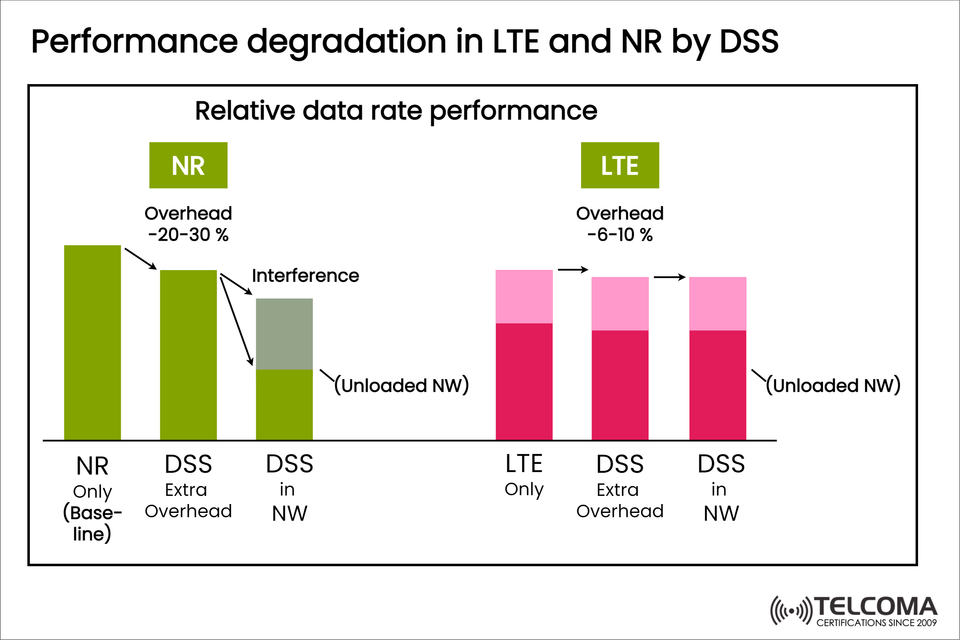
The image above illustrates how performance impacts both LTE and NR under DSS, indicating how overhead and interference can cut down the achievable speeds. Let’s break down these effects further.
What DSS Means for LTE and NR
DSS allows for spectrum sharing between LTE and NR by dynamically assigning resource blocks based on network needs. Instead of setting aside different frequency bands, DSS makes use of the same spectrum, which boosts efficiency and helps get 5G out there faster.
That said, DSS isn't without its problems:
It brings extra signaling overhead to handle LTE and NR working together.
The way resources are allocated leads to complex scheduling.
Working together causes interference, impacting performance.
Performance Issues in NR
The chart shows that NR takes the biggest hit when it's running under DSS.
NR Only (Baseline): This shows how well NR performs in a dedicated band.
DSS Extra Overhead: With DSS on, NR faces a 20-30% overhead, which really drops throughput.
DSS in Network (Unloaded): In actual use, the added interference from LTE worsens NR performance even more than just the overhead shows.
Main point: NR is quite sensitive to the overhead and interference from DSS, leading to noticeably lower performance compared to its baseline operation.
Performance Issues in LTE
LTE isn’t as heavily impacted by DSS as NR, but it still shows some decline:
LTE Only (Baseline): This is LTE’s top performance without DSS.
DSS Extra Overhead: LTE sees about a 6-10% drop due to DSS signaling overhead.
DSS in Network (Unloaded): Like NR, LTE’s performance also gets hit by working alongside NR, though not as badly as NR does.
Main point: LTE holds up fairly well under DSS but still loses some efficiency because of the overhead.
Comparing NR and LTE DSS Overhead
Technology Overhead in DSS Performance Impact Sensitivity to Interference NR (5G)20-30%High throughput reduction Very sensitive LTE (4G)6-10%Moderate reduction Less sensitive
Why NR Suffers More than LTE
There are several technical reasons why NR sees a bigger drop in performance when using DSS:
More signaling overhead: NR needs extra reference signals (like DMRS and synchronization signals) that take up space in the spectrum.
Complex coexistence: LTE wasn’t initially built for spectrum sharing, so DSS adds extra layers to ensure compatibility.
Interference sensitivity: NR’s advanced modulation and coding methods are more affected by interference that comes from sharing the spectrum.
What This Means for Network Operators
While DSS is a key step toward 5G, operators need to keep its downsides in mind:
Speeds up 5G rollout by using LTE’s spectrum.
Impairs performance, mainly for NR users.
Best for early 5G launches until dedicated NR bands are available.
Optimization is essential with strategies for scheduling and managing interference to keep both LTE and NR performing well.
Suggested SEO Keywords
To boost your reach and improve your ranking, here are some keyword ideas sorted by intent:
Primary Keywords (High Priority):
Performance of Dynamic Spectrum Sharing (DSS)
DSS in LTE and 5G NR
Coexistence of LTE and NR
DSS overhead in 5G
Secondary Keywords (Supporting):
Challenges with 5G deployment
LTE throughput issues
Interference problems with 5G NR
Spectrum sharing in 5G
NR versus LTE data rate performance
Long-Tail Keywords (Niche, High CTR):
How does DSS affect 5G NR performance?
Comparing LTE versus NR throughput in DSS networks
What is the DSS overhead percentage in LTE and NR?
Effects of DSS on network efficiency
NR performance decline with LTE coexistence
Internal Linking Strategy (WordPress Blog)
To boost SEO authority, consider linking this article to other related posts on your blog or future planned content:
Connect to “5G Spectrum Allocation Strategies” → explains dedicated versus shared spectrum.
Link to “LTE vs 5G NR: Key Differences in Network Architecture” → provides background before diving into DSS.
Reference “Challenges in 5G Rollout: Coverage vs Performance” → covers broader deployment challenges.
Direct to “5G Security and Reliability Considerations” → complements discussions about DSS performance.
External Linking Strategy
Include references to trusted sources for credibility (using do-follow or no-follow links as per SEO guidelines):
3GPP official documentation (Release 15/16 on DSS)
GSMA whitepapers on strategies for 5G deployment
Technical blogs from Qualcomm or Ericsson about DSS performance evaluations
Recommended Blog Enhancements
Incorporate Visuals:
Use a comparison table (already included above) but format it on WordPress with custom blocks for better readability.
Include a flow diagram of DSS scheduling (if possible) to help illustrate LTE/NR coexistence.
Add a Call-to-Action (CTA): Example:
“Looking to master 5G deployment strategies? Check out our comprehensive courses on optimizing LTE, NR, and DSS.”
Suggested Tags for WordPress
Dynamic Spectrum Sharing
5G NR performance
LTE throughput
DSS overhead
Spectrum sharing in telecom
Conclusion
Dynamic Spectrum Sharing (DSS) is a useful way to get 5G out there, but it does cause unavoidable performance hits in both LTE and NR. NR takes the biggest blow, with overhead and interference-related losses reaching up to 30%, while LTE faces a 6-10% drop.
For telecom operators and engineers, it’s a clear trade-off: DSS facilitates quicker 5G deployment but at the expense of spectral efficiency and user throughput. Long-term plans should aim for dedicated NR spectrum to fully tap into 5G's potential.