
Platooning in Connected Vehicles: How Telecom Powers the Future of Smart Mobility
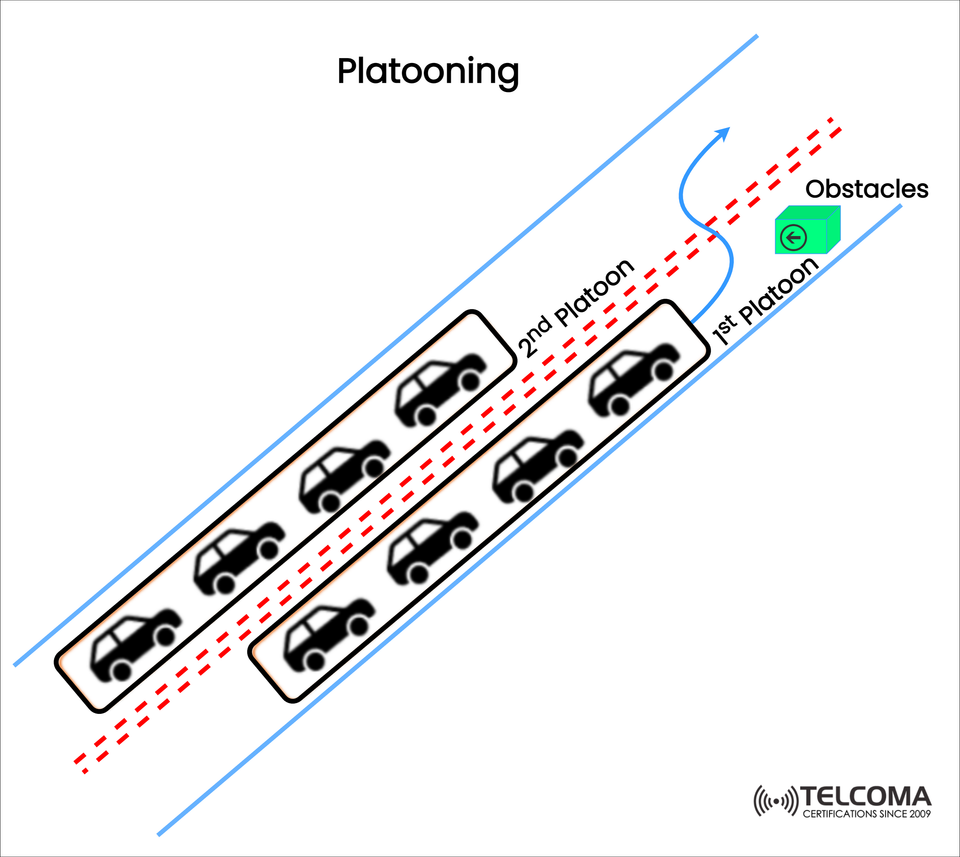

Platooning in Connected Vehicles: The Telecom Backbone of Smart Mobility
The auto industry is going through a big digital shift, all thanks to telecom tech like 5G, V2X (Vehicle-to-Everything) communication, and edge computing. One of the most exciting innovations here is platooning—which lets several vehicles travel together in a coordinated way.
In the image we've shared, you can see how platooning works: vehicles form groups, or platoons, where the lead vehicle deals with obstacles, and the following vehicles stay right in line, all thanks to real-time communication.
This article explores what platooning is all about, the crucial role of telecom in its success, and what it means for the future of intelligent transport systems (ITS).
What is Platooning?
Platooning involves linking vehicles together digitally through wireless communication technologies. Cars or trucks in a convoy keep a tight distance from one another, reacting instantly to the movements of the lead vehicle.
1st Platoon: The leading vehicle uses sensors and V2X modules to identify road conditions and obstacles.
2nd Platoon: The follower vehicles adjust their speed, braking, and steering based on data from the lead.
This setup cuts down on delays, reduces accidents, and lets vehicles work more effectively as a team.
Telecom’s Role in Platooning
Platooning relies heavily on ultra-reliable, low-latency communication (URLLC) that telecom networks provide.
Just having traditional vehicle sensors isn't enough because:
Radar and LiDAR have a limited range.
Human reaction times are too slow.
Real-time coordination needs millisecond-level latency.
Telecom networks, especially 5G and beyond, bridge this gap with Vehicle-to-Everything (V2X) communication:
V2V (Vehicle-to-Vehicle): Lets cars in a platoon share braking, speed, and route info instantly.
V2I (Vehicle-to-Infrastructure): Connects vehicles to roadside units (RSUs) for things like traffic signals and road hazards.
V2N (Vehicle-to-Network): Ensures continuous connectivity through cellular towers and edge cloud processing.
This connectivity makes platooning a safe, scalable, and smart mobility option.
How Platooning Works: Step-by-Step
Here’s a breakdown of the process as shown in the image:
Platoon Formation
Vehicles moving in the same direction automatically form a platoon using V2X protocols.
The first vehicle takes on the role of leader.
Obstacle Detection
The leader vehicle spots obstacles (like a stalled car) using onboard sensors.
It shares this info with the follower vehicles in real time.
Dynamic Maneuvering
The first platoon adjusts its path to avoid the obstacle.
The second platoon follows suit thanks to synchronized V2V communication.
Coordinated Braking and Acceleration
When the lead car brakes, all platoon vehicles brake at the same time—removing human delay.
This reduces the chances of rear-end collisions.
Resumption of Optimal Speed
Once the obstacle is out of the way, the platoon returns to its ideal speed and spacing.
Key Benefits of Platooning
Platooning provides several advantages in terms of safety, efficiency, and sustainability:
- Road Safety
Quick reactions to hazards via millisecond-level communication.
Lower chances of multi-car pileups.
- Traffic Efficiency
Vehicles can keep consistent speeds, which helps ease congestion.
Better overall highway throughput and lane discipline.
- Environmental Sustainability
Reduced air drag means lower fuel consumption for trucks.
Decreased CO₂ emissions lead to greener transportation.
- Cost Reduction for Fleet Operators
Savings on fuel can significantly reduce logistics costs.
Automated driving cuts down on driver fatigue and labor expenses.
Challenges in Platooning
Even with its promise, platooning faces a few technical and regulatory hurdles:
Network Coverage: 5G isn’t available everywhere yet, which limits widespread deployment.
Interoperability: Different manufacturers need to standardize V2X protocols.
Cybersecurity Risks: Platoons might be at risk of hacking or spoofing.
Public Acceptance: Some drivers might be uncomfortable with how close vehicles travel together.
Telecom companies, regulators, and automakers need to join forces to tackle these challenges.
Telecom Enablers for Platooning
Telecom technology makes platooning possible by providing reliable, low-latency, and secure communication. Key enablers include:
Telecom Technology| Role in Platooning
5G URLLC| Ultra-reliable, low-latency links for quick reactions
Edge Computing| Localized data processing to cut down on delays
MEC (Multi-Access Edge Computing)|Aids real-time decision-making close to the road
Network Slicing| Dedicated bandwidth for vehicle communication
C-V2X (Cellular-V2X)|Ensures scalable connectivity over large areas
Real-World Applications of Platooning
Platooning is already being tested in real scenarios:
Truck Platooning: Logistics companies are using truck convoys to save on fuel and speed up deliveries.
Highway Traffic Management: New smart highways are being built with lanes specifically for platooning.
Autonomous Vehicles: Platooning fits right in with fully self-driving cars.
For telecom operators, this opens up a new business opportunity: providing intelligent mobility services that depend on high-speed, reliable connectivity.
The Future of Platooning
As 6G comes closer, platooning will get even more efficient and autonomous:
AI-Driven Platooning: AI will help predict traffic flow and change platoon configurations on the fly.
Ultra-Dense Networking: 6G networks will allow for seamless platoon transitions, even in busy urban areas.
Cross-Border Standardization: Global telecom regulations will help unify V2X protocols for worldwide use.
Platooning is more than just cars driving closely together—it’s about telecom-powered systems that are reshaping mobility.
Conclusion
Platooning showcases the future of connected transport, blending automotive advances with telecom innovations. By tapping into 5G, V2X, and edge computing, vehicles can move in sync in ways that are safer, greener, and more efficient.
From the image, it’s clear that coordinated platoons can intelligently navigate obstacles, cut down on accidents, and optimize fuel use. There are still challenges like network coverage, standardization, and cybersecurity to address, but as telecom tech keeps advancing, platooning is set to be a key element of smart transportation systems around the globe.
For tech enthusiasts and telecom experts, platooning illustrates how communication networks are evolving beyond data—they're now crucial for smarter, safer, and more sustainable movement of people and goods.