
Preventing Pedestrian Collisions with V2X and 5G: How Telecom Enhances Road Safety

Keeping Pedestrians Safe with V2X and Smart Warnings from Telecom
Urban mobility is changing fast, thanks to telecom technologies like 5G, Vehicle-to-Everything (V2X), and edge computing. These advancements are really altering how vehicles and pedestrians interact on the road. A big part of this is the development of pedestrian safety warning systems, which aim to prevent accidents by sending real-time alerts to both drivers and pedestrians.
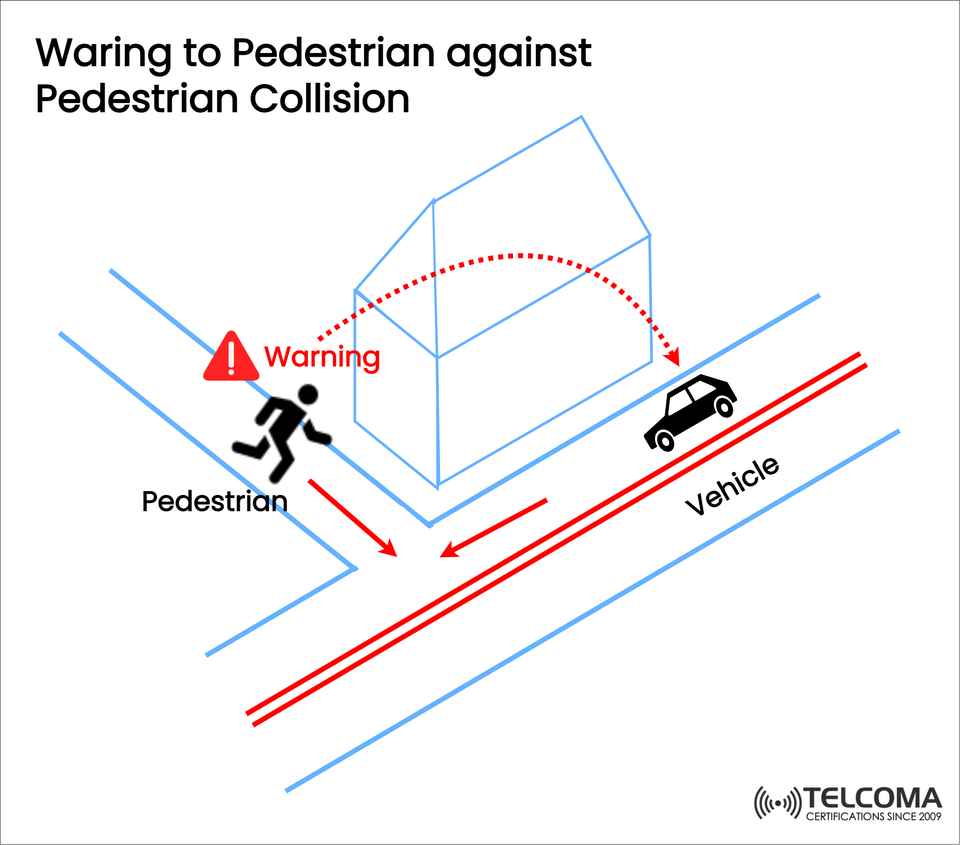
The image we've included shows a common but dangerous situation: a pedestrian about to cross a street with a car coming up behind a building. In cases like these, just relying on a driver’s visibility or a pedestrian’s awareness isn’t enough. But with connected communication systems powered by telecom networks, we can detect potential dangers and send timely warnings.
In this blog, we'll dive into how telecom innovations facilitate pedestrian safety systems, how they work, their benefits, challenges, and what the future might look like.
The Issue: Hidden Pedestrians and Slow Reactions
Collisions between pedestrians and vehicles are a major urban traffic risk. A lot of accidents happen because of:
Blocked visibility (pedestrians hidden by buildings, parked cars, or blind corners).
Delayed reactions from people (drivers often take too long to respond to sudden movements by pedestrians).
Distraction (pedestrians crossing while not paying attention).
The image clearly illustrates this issue: a building blocks the view between a vehicle and a pedestrian. Without network-enhanced awareness, the risk of a collision is high for both.
The Telecom Approach: V2X-Driven Warning Systems
Telecom networks make Vehicle-to-Everything (V2X) communication possible, enabling vehicles, pedestrians, and infrastructure to exchange real-time safety information.
Here’s how it all works for pedestrian safety:
Detecting Pedestrian Presence - Smartphones, wearables, or roadside units (RSUs) used by pedestrians send out their locations via cellular V2X (C-V2X) or dedicated short-range communication (DSRC).
Communicating with Vehicles - Vehicles get this data through low-latency 5G networks or direct signals from V2P (Vehicle-to-Pedestrian). They assess potential collision risks based on factors like vehicle speed, pedestrian movement, and the layout of the road.
Sending Warning Alerts - If a threat is detected, both the driver and pedestrian receive alerts. Vehicles might even engage automatic braking systems if the driver doesn’t act in time.
Edge Computing for Network Improvement - Information is processed at multi-access edge computing (MEC) nodes, which cuts down on latency and ensures instant alerts.
In the scenario shown, the pedestrian gets a warning, helping them avoid stepping into the path of an oncoming vehicle.
Why Telecom is Essential for Pedestrian Safety
These warning systems need a strong telecom infrastructure to work well. Some key requirements are:
Ultra-Low Latency (5G URLLC): Alerts need to be sent in a matter of milliseconds.
Reliability: If signals drop, warnings can be missed.
Consistent Connectivity: Pedestrians might move through areas with varied coverage; having service without interruptions is crucial.
Support for Massive IoT: The network needs to manage thousands of connected vehicles, pedestrians, and RSUs at once.
Telecom technologies shift safety from being reactive (like braking after spotting a pedestrian) to proactive (predicting and preventing collisions before they happen).
Main Advantages of Pedestrian Safety Warning Systems
- Improved Road Safety
Cuts down on accidents caused by blocked views.
Protects vulnerable pedestrians, especially in city settings.
- Smarter Urban Mobility
Fosters intelligent intersections where vehicles, infrastructure, and pedestrians coordinate.
Helps minimize traffic disruptions caused by accidents.
- Inclusivity
Supports groups at higher risk, such as children, elderly individuals, and people with disabilities.
- Integration with Autonomous Driving
Autonomous vehicles can take advantage of pedestrian warnings to enhance their safety features.
Tech Behind Pedestrian Collision Warnings
Here’s a rundown of the telecom technologies that make this possible:
Technology Role in Pedestrian Safety
5G URLLC Millisecond-level alerts to avoid collisions
C-V2X (Cellular V2X) Direct communication between vehicles and pedestrians
Edge Computing (MEC) Processes data locally for quicker warnings
AI and Machine Learning Predicts pedestrian behavior based on movements
RSUs (Roadside Units) Extend connectivity in urban blind spots
Real-World Uses and Deployments
There are already several projects testing or launching pedestrian warning systems:
Smart Crosswalks: These come equipped with sensors and RSUs, alerting vehicles when pedestrians step onto the road.
Connected Pedestrian Apps: Pedestrians can use mobile apps that communicate with nearby vehicles to send out safety alerts.
Fleet Safety Systems: Logistics companies use connected safety systems to help avoid crashes in busy urban spaces.
Telecom operators are taking on a key role by providing connectivity services that make these systems possible.
Challenges in Implementation
Even though the tech is promising, there are hurdles to wider adoption:
Coverage Gaps: Not every area is equipped with 5G or V2X infrastructure.
Device Adoption: Not all pedestrians will carry the required devices.
Data Privacy: Keeping track of pedestrian movements brings up privacy issues.
Interoperability: Standardization between automakers, telecoms, and infrastructure providers is still a work in progress.
Future of Pedestrian Safety in 6G and Beyond
As technology progresses towards 6G, pedestrian safety will likely see even more innovation:
Holographic Communication: Vehicles and pedestrians could share 3D spatial awareness data.
AI-Driven Predictions: Systems will not only anticipate movements but also intentions (like if someone looks ready to step onto the street).
Integration with Smart Cities: Streetlights, cameras, and road sensors will function as part of a unified safety grid.
Wrapping Up
The image we analyzed highlights a significant challenge in road safety: the hidden pedestrian. With traditional visibility methods, both drivers and pedestrians face substantial risks. But with telecom-driven V2X communication, 5G, and edge computing, we can address these dangers through real-time alerts.
Pedestrian safety systems showcase how telecom is evolving beyond mere connectivity to truly saving lives. By allowing vehicles, infrastructure, and pedestrians to communicate instantly, telecom networks provide a foundation for safer, smarter, and more sustainable urban mobility.
For technology enthusiasts and telecom pros, this is just a sneak peek into the future: a world where every movement on the road fits into a connected ecosystem aimed at preventing accidents.