
The Global Rise of Sustainable Land Management: From the Dust Bowl to 205 Million Hectares
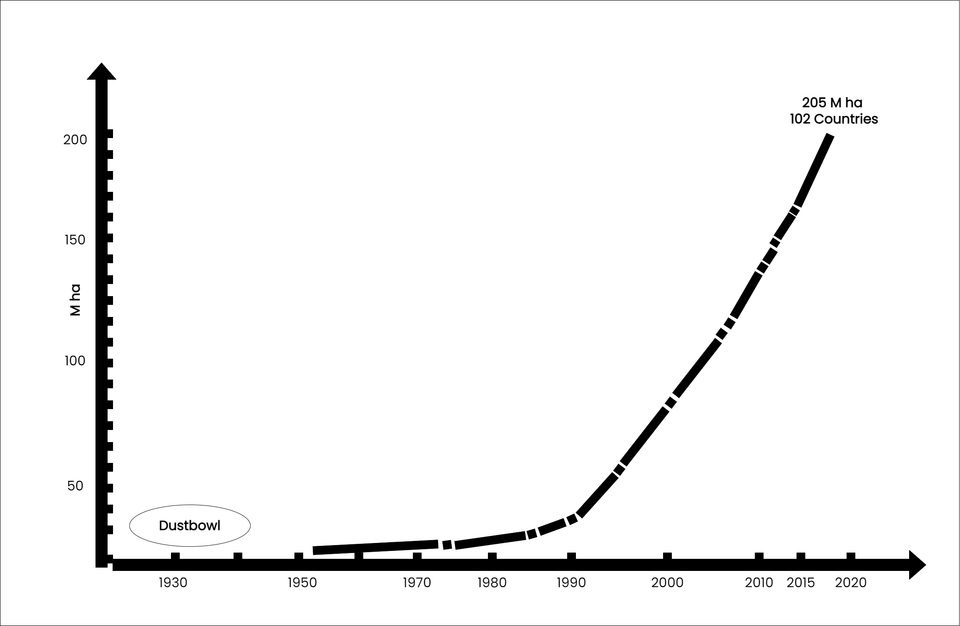

The image above conveys a compelling narrative of change — transitioning from the ecological devastation of the 1930s Dust Bowl to a present-day scenario where over 205 million hectares across 102 countries have embraced sustainable land management practices.
This remarkable increase highlights not just growing environmental awareness but also the expanding impact of technology — especially through IoT sensors, satellite monitoring, and AI analytics — in transforming global agriculture and protecting our natural environment.
For telecom experts and technology innovators, this surge presents an exciting opportunity: the digital transformation of land management through interconnected systems, real-time data, and AI-driven decisions.
The Historical Context: Learning from the Dust Bowl
Back in the early 1930s, the Dust Bowl devastated the American Midwest, ruining millions of hectares of farmland. Poor land management and severe drought turned fertile soil into dust clouds, uprooting families and crippling local economies.
The Dust Bowl period, which the chart begins with, was a turning point in how we understand land sustainability. It sparked the first organized efforts in soil conservation, crop rotation, and ecosystem management.
Key Takeaways:
Over-cultivation harms soil health.
Natural ecosystems should be woven into farming methods.
Sustainability is crucial for survival, not just a choice.
These insights paved the way for years of advancements that would reshape global agricultural practices.
The Rise of Sustainable Land Management
The graph illustrates a slow but steady increase from 1950 to 1980, followed by a noticeable spike after 1990 — culminating in an impressive 205 million hectares being managed sustainably by 2020.
This growth coincides with advancements in technology, global teamwork, and data-driven strategies.
Key Milestones:
Year/Period Development Impact
1930sDust Bowl crisis Brought awareness to soil conservation
1950s–1970sBasic conservation methods Localized management improvements
1980sMechanized farming and irrigation Boosted yields, but mixed sustainability
1990sPrecision agriculture adoption Initiated early data-driven farming
2000sIoT & remote sensing in farming Enabled real-time land health monitoring
2010s–2020sGlobal scaling of sustainable practices Oversaw 205 M ha in sustainable management
This worldwide growth highlights how technology and data are essential for protecting and restoring land ecosystems.
Technological Drivers Behind the Growth
The significant uptick after 1990 showcases how digital transformation and connectivity have transformed agriculture and environmental monitoring.
IoT and Smart Sensors
IoT devices now lay the foundation for precision agriculture and land monitoring.
They gather real-time data on:
Soil moisture and temperature
Nutrient levels
Weather conditions
Crop health via leaf sensors
These tools help make water and fertilizer usage more efficient, ensuring sustainability without cutting into yields.
Satellite Imaging and Remote Sensing
Satellites equipped with multispectral and hyperspectral sensors offer a broad view of soil and vegetation health.
NDVI (Normalized Difference Vegetation Index) is utilized to assess crop vitality.
Radar-based sensing monitors land use, even with cloudy skies.
GIS platforms integrate this information for farmers and policymakers alike.
By merging telecom infrastructure with Earth observation technologies, countries can keep tabs on degradation trends and take proactive measures.
Artificial Intelligence and Machine Learning
AI has sped up data analysis, turning raw numbers into useful insights.
Predictive analytics can forecast droughts, floods, and soil issues.
ML algorithms guide crop rotation and irrigation schedules.
Computer vision helps spot plant diseases early.
AI enables countries to scale sustainable practices more effectively and tailor solutions to fit local conditions.
Cloud Computing and Data Platforms
Cloud computing meets the extensive data processing demands of global land management efforts.
It facilitates:
Centralized data sharing among agencies and farmers.
Real-time dashboards to visualize environmental health.
Alignment with national agricultural policies.
The growth of multi-access edge computing (MEC) also boosts data transmission speed for remote rural areas that might struggle with connectivity.
5G and Connectivity Revolution
The move to 5G has enhanced smart agriculture systems by providing:
Ultra-low latency for real-time data from IoT sensors.
Massive device connectivity, allowing countless sensors within a square kilometer.
High bandwidth, facilitating drone imagery and video analysis.
Telecom networks serve as the backbone for global sustainability initiatives.
Global Growth: 205 Million Hectares, 102 Countries
The chart shows that by 2020, sustainable land management covered 205 million hectares across 102 nations.
Leading Regions in the Shift:
Latin America: Brazil and Argentina have taken the lead in no-till farming.
Asia: Countries like India and China utilize IoT for efficient irrigation.
Africa: Nations such as Kenya harness mobile connectivity for soil data sharing.
Europe: The EU’s Common Agricultural Policy (CAP) promotes sustainability incentives.
This illustrates an exponential global partnership, blending local knowledge with digital frameworks that span the globe.
Telecom and Tech: The New Guardians of Land
Telecom infrastructure plays a vital role in enhancing sustainable land management.
It supports IoT communication, sensor connectivity, and satellite data transmission.
Key Contributions from Telecom:
5G and LPWANs (LoRaWAN, NB-IoT): Broaden network accessibility to rural areas.
Edge and Cloud computing: Handle environmental data processing efficiently.
AI-driven network management: Focus on crucial agricultural data.
Public-private collaborations: Help scale the deployment of smart agriculture networks.
This partnership between telecom and sustainability highlights how technology can be an agent of environmental improvement.
Advantages of Technology-Driven Land Restoration
Increased Yields with Less Resource Use: Smarter irrigation and fertilization.
Less Soil Erosion: Data-led land planning helps avoid degradation.
Mitigating Climate Change: Healthier soils as natural carbon sinks.
Food Security: Stable ecosystems lead to reliable agricultural output.
Global Collaboration: Shared data frameworks unite nations around sustainability goals.
Challenges and Future Outlook
While achievements are notable, some issues persist:
Connectivity gaps in rural or developing areas.
High initial costs for IoT systems.
Concerns over data privacy and ownership.
Need for training for local farmers and policymakers.
The coming decade may see:
AI-driven autonomous farms.
Broader 5G and satellite connectivity.
Blockchain integration for transparent food supply chains.
With ongoing investments and innovation, we might surpass 300 million hectares under sustainable management by 2030.
Conclusion
The evolution from the 1930s Dust Bowl to today’s 205 million hectares of restored land illustrates how humanity has come to blend ecological understanding with digital intelligence.
This remarkable growth isn’t just about numbers; it's about a change in perspective. Technology has become fundamental to global sustainability, and telecom networks are its lifeblood.
For tech professionals, one thing is clear: the future of sustainability is going to be connected, data-driven, and smart. And as the graph vividly illustrates, when technology meets environmental stewardship, the potential for growth is truly exponential.