
Understanding EMS Architecture in Telecom Networks: FCAPS, NEs, and NMS Integration
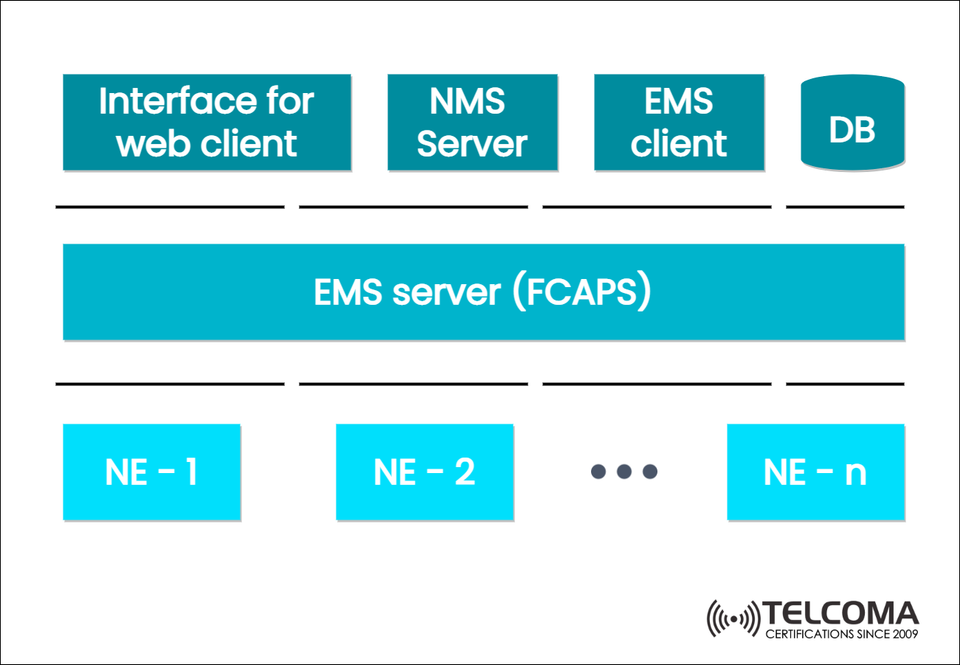

EMS Architecture in Telecom Networks: A Closer Look
Telecom networks today are intricate setups made up of various network elements (NEs), databases, and management layers that enable smooth communication. To handle this complexity, telecom operators depend on Element Management Systems (EMS), which play a vital role in the Operations Support System (OSS) hierarchy.
The image uploaded shows a typical EMS architecture: several NEs are connected to an EMS server, which provides FCAPS management (Fault, Configuration, Accounting, Performance, Security). The EMS communicates with higher-level systems like the Network Management System (NMS), EMS clients, databases, and web-based interfaces, allowing operators to manage, monitor, and optimize the network more effectively.
In this article, we’ll take a deeper dive into the components, functionality, and benefits of EMS architecture, giving telecom professionals and tech enthusiasts a clear understanding of how it fits into network management frameworks.
Understanding EMS (Element Management System)
The EMS is tasked with managing one or more network elements in a telecom setting. These elements could be switches, routers, base stations, or any other devices that offer network functionality.
It provides a centralized management interface that simplifies the complexities of individual devices, offering end-to-end monitoring and control for operators.
Key Components of EMS Architecture
The image highlights some essential components found in a typical EMS architecture:
- Network Elements (NEs)
These are the physical or virtual devices in the network like NE-1, NE-2, ... NE-n.
NEs generate data about performance, alarms, configurations, and events that need monitoring.
EMS communicates with these NEs using protocols like SNMP, Net Conf, TL1, or vendor-specific APIs.
- EMS Server (FCAPS Layer)
The EMS server is essentially the system's brain, taking care of FCAPS management functions:
FCAPS Function Purpose Fault Management Detects, isolates, and resolves network issues, generating alarms and logs. Configuration Management Maintains device configurations, software updates, and provisioning. Accounting Management Tracks usage data for billing and capacity planning. Performance Management Monitors KPIs like latency, throughput, and error rates. Security Management Ensures authorized access, encryption, and compliance.
The EMS server gathers information from all NEs, processes it, and sends actionable insights to higher-level management systems.
- Interface for Web Client
This component allows operators and engineers to access the EMS via a browser-based interface.
Benefits:
User-friendly dashboards
Remote monitoring and control
Role-based access for different users
- EMS Client
Alongside web interfaces, there may be dedicated EMS clients for advanced configuration and troubleshooting. These often provide GUI-based management tools that come with more features compared to web interfaces.
- NMS Server Integration
The Network Management System (NMS) acts as a higher-level platform managing multiple EMSs within the network.
EMS sends aggregated data to NMS, enabling end-to-end network visibility.
NMS takes care of service-level management, reporting, and orchestration.
- Database (DB)
The database holds:
Historical performance data
Configuration backups
Alarm/event logs
Inventory data
Having a sturdy database enables operators to carry out trend analysis, SLA reporting, and predictive maintenance.
Benefits of EMS Architecture
Setting up an EMS with this architecture brings several perks:
Centralized Control: Operators can manage multiple NEs from one system.
Vendor Independence: EMS simplifies vendor-specific complexities, making multi-vendor management easier.
Scalability: New NEs can be included without overhauling the entire management setup.
Improved Troubleshooting: FCAPS functions help quickly pinpoint issues, cutting down mean time to repair (MTTR).
Automation: Configuration management can be automated, reducing chances of manual errors.
How EMS Integrates with OSS/BSS
EMS fits into a layered management structure:
Layer Function Network Element (NE)Provides core network functionality (e.g., base station, router). EMS Manages individual NEs and implements FCAPS. NMS Manages groups of EMS, offering end-to-end visibility. OSS/BSS Handles service assurance, customer management, and billing.
This integration ensures that faults, performance data, and configurations are visible not just to network engineers but also to business and service teams.
Challenges in EMS Deployment
Despite its benefits, deploying EMS poses some challenges that telecom professionals need to keep in mind:
Interoperability: Ensuring EMS functions well with multi-vendor NEs and integrates with OSS/NMS.
Scalability: Managing the huge scale of IoT/5G deployments with thousands of NEs.
Data Overload: Finding relevant alarms and avoiding alert fatigue can be tricky.
Security: Keeping unauthorized access to management planes at bay is crucial.
Mitigation strategies could involve using standardized protocols, building in redundancy, and leveraging AI/ML-based analytics for event correlation.
Real-World Use Cases
5G Network Rollouts: EMS oversees baseband units, remote radio heads, and fronthaul equipment.
Optical Networks: EMS manages wavelength and path for DWDM/OTN systems.
Enterprise Networks: EMS centralizes monitoring for routers, firewalls, and switches.
IoT Networks: EMS collects data from IoT gateways and sensors to process it upstream.
Conclusion
EMS architecture is crucial for network operations, linking network elements to higher-level network management systems. By implementing FCAPS functionality, EMS helps operators keep the network reliable, optimize performance, and ensure security at scale.
In the current era of 5G, cloud-native infrastructure, and massive IoT deployments, EMS systems are adapting to support virtualization, automation, and AI-driven insights. For those in telecom, grasping EMS architecture is essential for designing, managing, and scaling networks efficiently.